Photo: Jon Gudorf Photography, CC BY-SA 2.0
David Gareja is a rock-cut monastery complex founded in the 6th century, about 60-70 km southeast of Tbilisi in semi-desert. Our colourful desert tour combines the monasteries with the Mravaltskaro colourful mountains, with only about 1 km of easy walking in total. Summers here are very hot, so bring water, a hat and sunscreen.
What David Gareja is
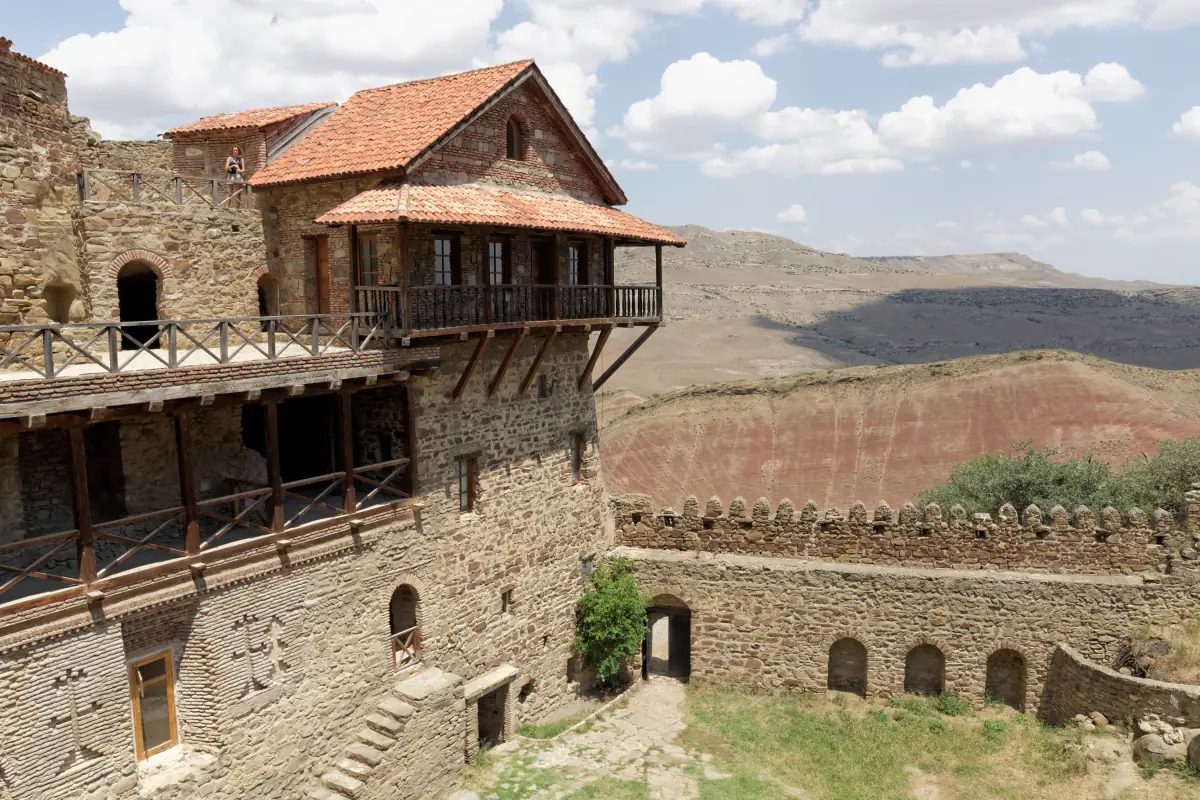
The David Gareja monastery complex lies in Kakheti, in Sagarejo municipality, on the semi-desert slopes of Mount Gareja at the edge of the Iori Plateau, about 60-70 km southeast of Tbilisi. It was founded in the first half of the 6th century by Saint David, one of the Thirteen Assyrian Fathers.
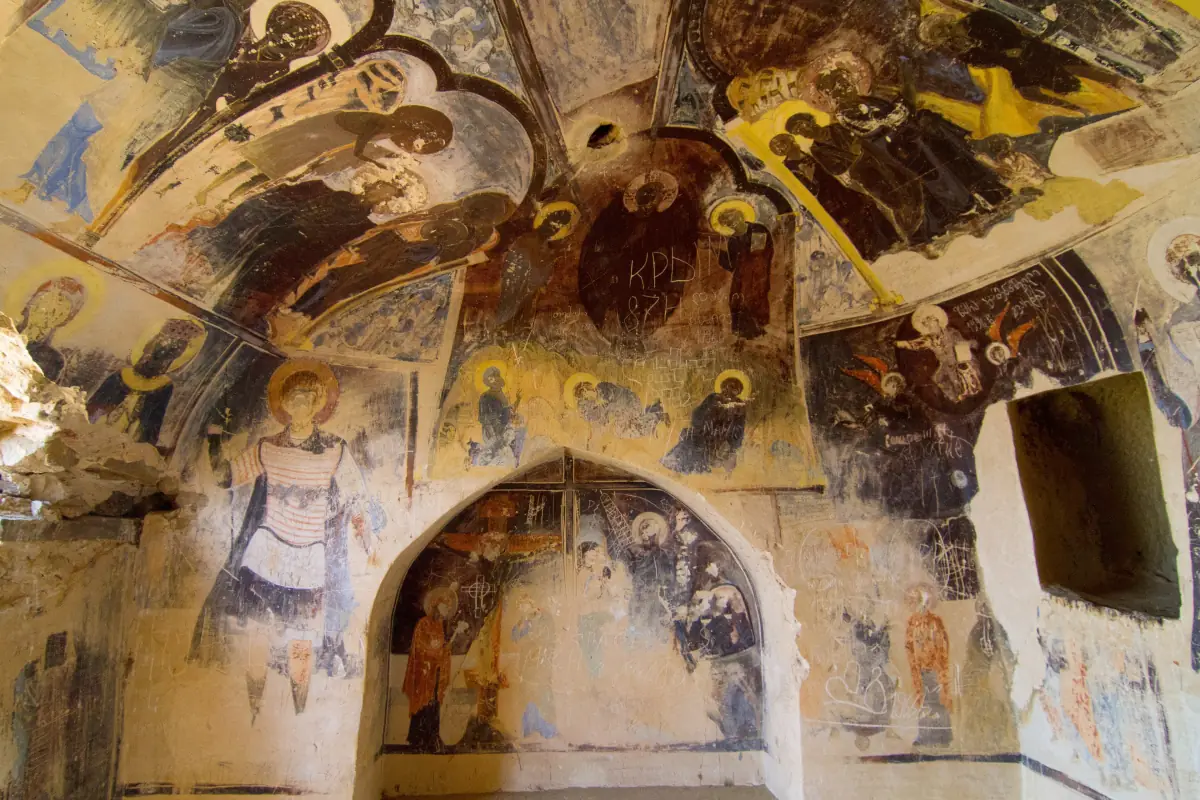
The complex has hundreds of cells, churches, chapels and refectories, most of them cut into the rock. David's Lavra was expanded by his disciples Dodo and Lukiane. Dodo's Rka ('Dodo's horn') is named after Dodo, and Natlismtsemeli is named after John the Baptist. The complex was at its height from the late 11th to the early 13th century, when the Udabno, Bertubani and Chichkhituri monasteries were built and wall painting flourished.
Part of the complex lies on the Georgia-Azerbaijan border: Bertubani is on the Azerbaijani side, and parts of Udabno and Chichkhituri are disputed. On site, follow the tour escort's directions.
The colourful mountains and Mravaltskaro
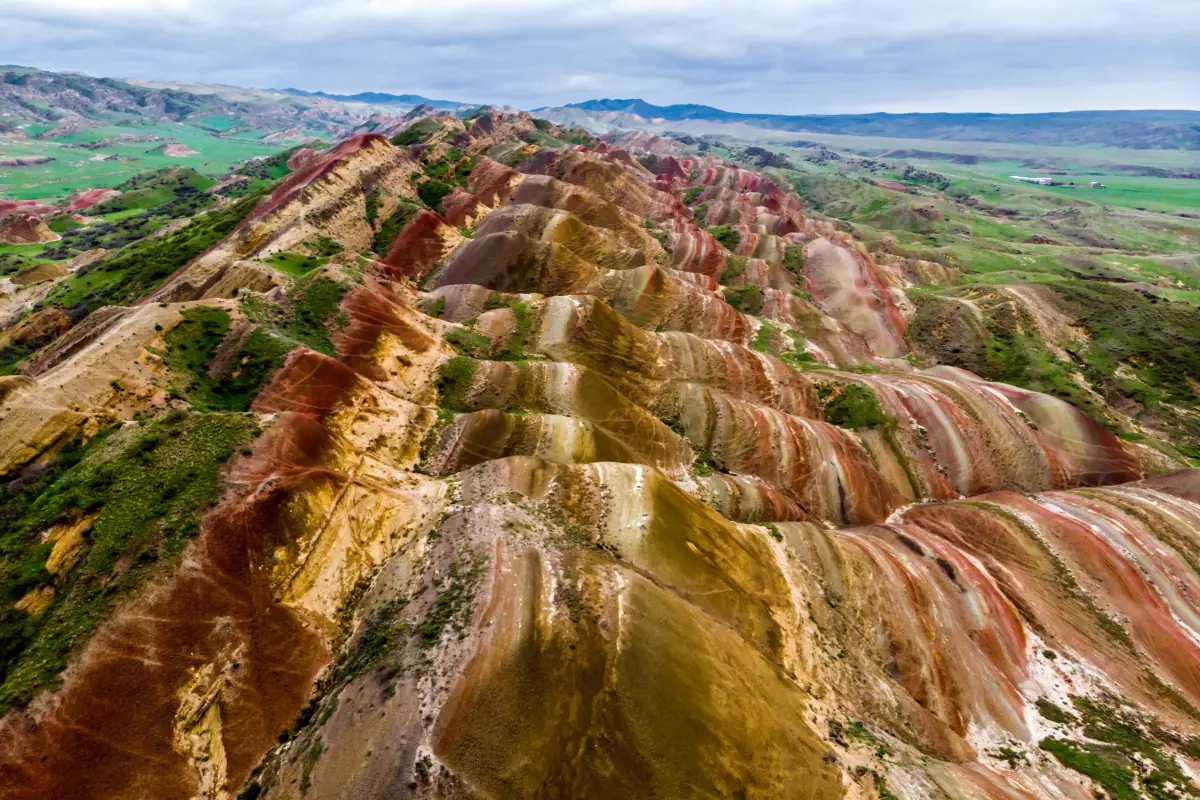
The Gareja semi-desert has striped red and yellow hills that people call the colourful or rainbow mountains. Georgia's national tourism site describes Mravaltskaro reservoir, where the hills and sky are reflected in the water, and notes that many people call the place 'Georgian Mars'. The site places the reservoir in Gardabani municipality, in Kvemo Kartli.
Our two tours: which to choose
- Colourful desert and David Gareja: Dodo's Rka, the David Gareja monastery complex, the colourful mountains, the Mravaltskaro colourful mountains and reservoir, the Monastery of St John the Baptist and views over the desert. About 1 km of easy walking in total. Leaves at 08:00, back at about 22:00.
- Sabereebi: the Sabereebi complex of Gareja (9th-10th centuries), with groups of rock-cut caves. Leaves at 08:00, back at about 23:00.
If it is your first visit and you want both monasteries and colourful landscapes in one day, choose the colourful desert tour. If you have already seen Gareja or are especially interested in cave monasteries, choose Sabereebi. Both tours include minibus transport, a tour escort and photography.
Walking and heat
There is little walking on the colourful desert tour and it is easy, but the paths are stony and sloping in places. Gareja is semi-desert: there is almost no shade and midday in summer is very hot. If you do not cope well with heat, go in spring or autumn.
Georgia's national tourism site says the Gareja semi-desert is especially beautiful in late spring, when fresh grass comes up through the red soil. Our Gareja tours run in any weather and are postponed only if there is a problem with the road. After rain the ground can be muddy and slippery.
What to bring
- Plenty of water, more than usual in summer.
- A hat, sunglasses and sunscreen.
- Closed shoes with good grip for stony paths.
- Light clothes that cover shoulders and knees. To enter a monastery, women need a headscarf and a skirt, men long trousers.
- Snacks. Meals are not listed in the tour data.
- Your ID card or passport, as the complex is close to the border.
- In spring and autumn, a warm layer: mornings and evenings in the desert are cool.
Stay on the paths, especially near cliff edges and on the border side. The soil on the colourful hills is loose and slippery.
What to do next
Pick a tour, check the price and latest details on the tour page and book your seat early. If you cannot decide which Gareja trip suits you, write to us.
Frequently asked questions
How much walking is there?
On the colourful desert tour, about 1 km in total, easy. The Sabereebi tour data gives no distance, so ask us when you book.
When is the best time to visit Gareja?
Spring and autumn are the most comfortable. Summer is very hot and there is almost no shade.
What should I wear for the monastery?
Women need a headscarf and a skirt, men long trousers. Shoulders and knees should be covered.
Which tour is best for a first visit?
The colourful desert and David Gareja tour, because it includes both the monasteries and the colourful mountains.
Does the tour run in the rain?
Yes. It runs in any weather and is postponed only if there is a problem with the road.